How to Write a Postcard for Kids
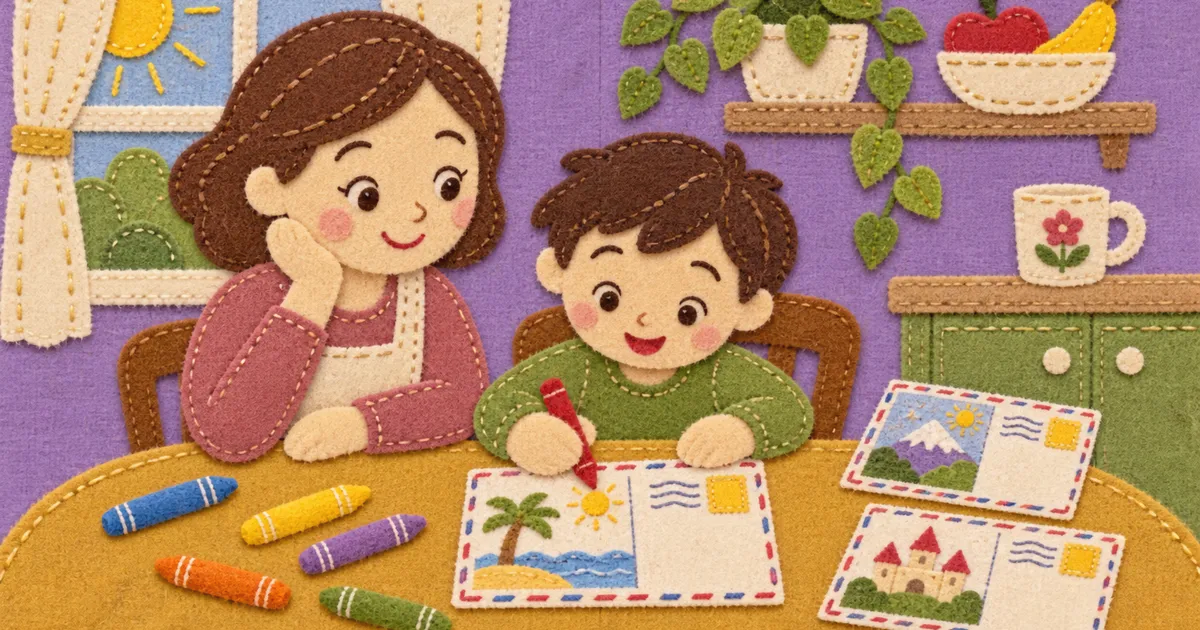
A child can write a postcard in five steps: choose a greeting, state where they are, share one or two details, add a closing, and address the card. How to Write a Postcard: A Practical Guide for Kids connects these parts. The message can be brief yet complete. Younger children may write two or three sentences with help. Older children can add reasons, descriptions, and questions. The goal is a short message another person can read, understand, and enjoy.
What Children Need to Understand
A postcard carries a personal message and provides delivery information. On many cards, the picture is on the front; the message and address are on the back. Designs differ, so an adult should identify the message area, address area, and stamp position.
Children need a purpose: send holiday news, thank someone, describe a day trip, or report a new place. When using How to Write a Postcard: A Practical Guide for Kids, ask the child to finish: “I want the reader to know that…” The answer becomes the postcard’s central idea.
The Five Parts of a Clear Postcard
The five-part plan in How to Write a Postcard: A Practical Guide for Kids provides structure without making every message identical. Follow it in order, then check for missing parts.
- Greeting: Begin with “Hi Grandma,” “Dear Cousin,” or another suitable greeting.
- Opening: State where you are or why you are writing: “We are staying near the sea.”
- Details: Add one or two specific facts: “The water is cold, but we swim every morning.”
- Closing: End with “See you soon,” “Love,” or “Best wishes,” depending on the reader.
- Name and address: Sign the message, then write the recipient’s address in the correct area.
The address must follow the recipient’s national postal format. It usually requires the recipient’s name and local address lines. Countries arrange street names, building numbers, postal codes, and regions differently. A parent should copy the address from a trusted source and verify local rules rather than use a foreign example.
Grammar That Keeps the Message Clear
Use the present simple for routines and facts: “The town is small,” “We walk to the beach each day,” and “The hotel serves breakfast at eight.” Use the present continuous for events happening now or near the writing time: “We are visiting a castle,” or “I am learning to sail.”
Use the past simple for a finished activity: “Yesterday, we climbed a hill.” Tenses may change when the time changes. Mark each change with words such as today, now, yesterday, or last night. “Yesterday, we visited the market. Today, we are resting” sounds natural.
To apply How to Write a Postcard: A Practical Guide for Kids, begin with short sentences. Each sentence normally needs a subject and verb: “The museum was busy.” Contractions such as “I’m,” “we’re,” and “it’s” suit a friendly postcard, but they require an apostrophe.
Rules and Examples for Different Messages
The postcard’s purpose determines its tense and details. This table contrasts four purposes. The examples are models rather than scripts.
A postcard can combine these patterns: “Hi Auntie, We are staying in a small mountain town. Yesterday, we rode a cable car. Today, we are walking beside the river. The view is beautiful. See you soon,.” Each sentence adds a place, event, action, or feeling.
Punctuation guides the reader. Put a comma after the greeting and closing. End each sentence with a full stop, question mark, or exclamation mark. One exclamation mark can express excitement: “The view is amazing!” Several in a row reduce readability.
Mistakes Children Can Spot and Fix
Children often fill the small writing space before planning. Draft the message on ordinary paper first. Remove repeated information, retain the strongest details, and copy the final version neatly. Small handwriting still needs spaces between words.
An unmarked tense switch confuses the timeline. “We visit the zoo yesterday and are seeing lions” should become “We visited the zoo yesterday and saw lions.” If the visit is happening now, write “We are visiting the zoo and looking at the lions.” Time words indicate the correct tense.
Children may forget a greeting, closing, capital letter, or address line. Keep How to Write a Postcard: A Practical Guide for Kids beside the draft and check every part once. A parent should verify the address because a strong message cannot arrive with incomplete or misplaced delivery details.
Practice Activities at Home or in a Lesson
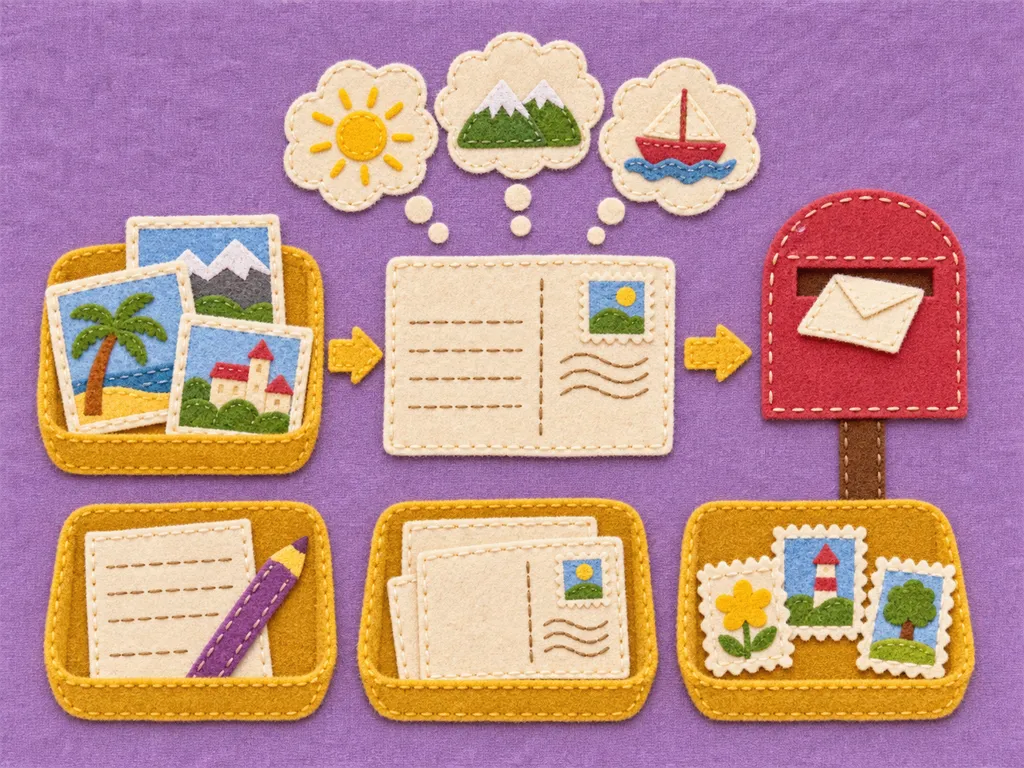
Practice improves when children have something concrete to describe. A family photograph, local-place picture, or unused postcard can supply ideas. In LearnLink lessons, our tutors can adapt the task: younger learners may complete sentence frames, while older learners draft and edit independently.
Fill in the Postcard
Complete the sentences with am, is, are, visited, or love: “Hi Grandma, We ___ staying near a lake. The water ___ cold. Yesterday, we ___ a small museum. I ___ watching the boats from our window. ___,.” Answers: are, is, visited, am, Love.
After checking the answers, ask why each form fits. “We” takes “are,” while “I” takes “am.” “Yesterday” signals the past form “visited.” Explaining a choice shows more understanding than copying the correct word.
Turn Notes into a Postcard
Use these notes: “city visit; rainy morning; science museum yesterday; eating warm soup now; home on Saturday.” Write a greeting, four connected sentences, and a closing. One possible answer is: “Dear Uncle, We are visiting the city. It is raining this morning. Yesterday, we explored the science museum. Now we are eating warm soup. We will be home on Saturday. Best wishes,.”
For the final check, let the child read aloud. The ear often catches a missing word or abrupt tense change. Check five items: greeting, opening, specific details, closing, and verified address. This routine gives editing concrete steps.
- Choose a postcard and identify the picture, recipient, greeting, message, and sign-off.
- Draft three short sentences describing your trip, weather, and favorite activity.
- Write the recipient's name and address clearly on the right side.
- Check capital letters, punctuation, spelling, and a friendly closing before sharing.
- Swap postcards with a partner and read each message aloud for clarity.
When a word has several meanings or pronunciations, Cambridge Dictionary is a useful check before turning it into child-friendly examples.
Frequently Asked Questions
How Long Should a Child’s Postcard Be?
Most children can communicate one idea in three to six sentences. A beginner might write a greeting, two sentences, and a closing. An older or more confident learner can add a past event, present activity, and question. Space is limited, so plan before writing on the card.
Can Young Children Write a Postcard Independently?
Yes, with support matched to the child’s reading, writing, and fine-motor skills. How to Write a Postcard: A Practical Guide for Kids can serve as a spoken checklist. A parent may provide sentence starters, spell a difficult place name, or copy the verified address while the child chooses and writes the message.
Which Tense Should a Child Use in a Postcard?
No single tense is required. Use the present simple for facts and routines, the present continuous for current actions, and the past simple for finished events. A postcard may use all three. Time markers such as “usually,” “now,” and “yesterday” show the sequence and prevent accidental tense changes.
Should a Postcard Use Formal or Informal English?
The reader determines the tone. A postcard to a close relative or friend can use “Hi,” contractions, and a warm closing such as “Love.” A message to a teacher or less familiar adult may begin with “Dear” and end with “Best wishes.” Both versions should be polite and readable.
How Can a Multilingual Child Plan the Message?
The child may discuss the idea in any confident language, then build the English message from short sentence frames. This supports planning without word-for-word translation. First identify where the child is, what happened, and what the reader should know. Then check English tense, word order, spelling, and punctuation.
Start your child's English journey today — book a trial lesson with LearnLink.
Stay updated on our latest tips and resources by following us on Instagram LearnLink.